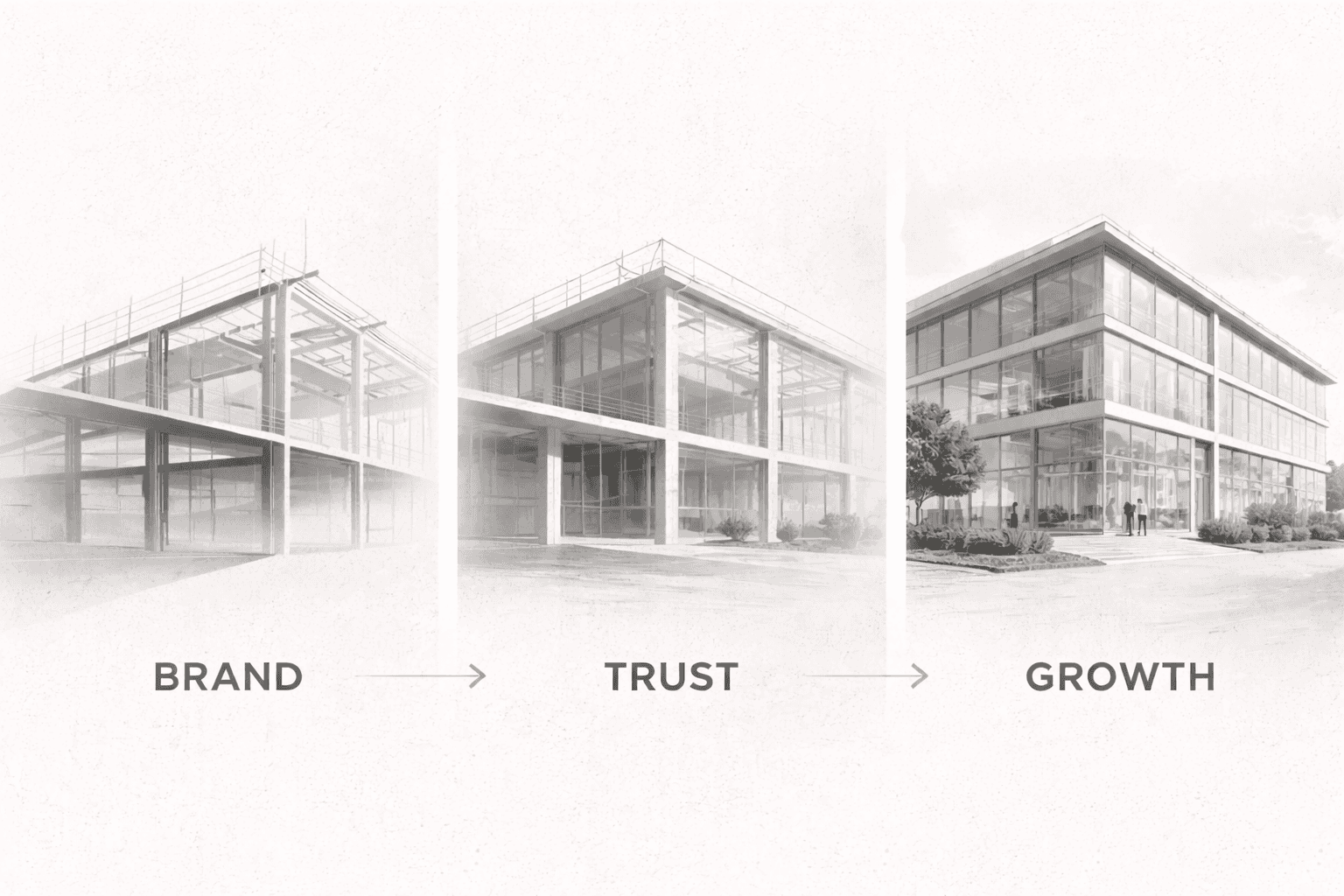
Brand as Engine, Not Ornament
Why Brand Is Your Business’s Hardest Working Asset
Most Businesses Treat Brand as Decoration
Most businesses treat brand as decoration.
Something applied late in the process. A logo. A color palette. A final polish meant to make things feel more legitimate. It’s often discussed as surface-level—important, maybe, but not structural.
That assumption is expensive.
Because brand, when done correctly, is not an ornament. It’s an engine. It doesn’t exist to impress; it exists to support everything else. When it’s absent or misunderstood, the strain shows up elsewhere.
Brand Works Long Before Anyone Notices
Brand rarely announces itself. Instead, it works quietly in the background, shaping how people perceive you, how much they trust you, and whether they feel confident engaging at all.
This happens long before a sales call. Long before a conversion. Long before someone can articulate why they chose you.
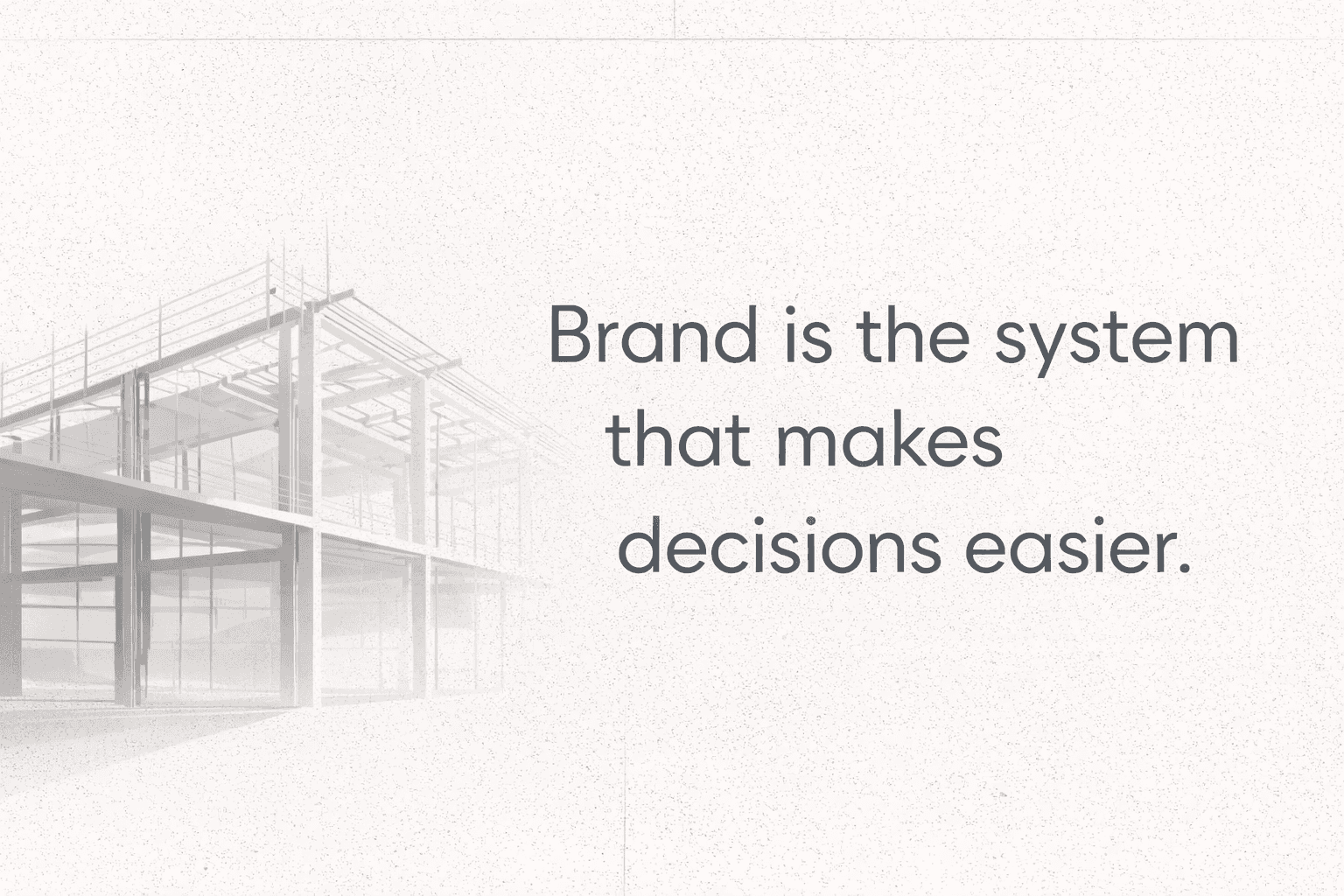
At its core, brand is the system that makes decisions easier—for your audience, for your team, and ultimately for the business itself.
When Brand Is Treated as Cosmetic
When brand is treated as decoration, the business compensates in subtle but costly ways. The effects don’t always look like “brand problems,” which is why they’re often misdiagnosed.
Over time, that strain tends to surface as:
Messaging that drifts or contradicts itself
Marketing that relies on volume instead of clarity
Sales conversations driven by persuasion rather than alignment
Internal teams debating decisions that should feel obvious
None of these issues originate in design alone. They stem from the absence of a shared, strategic foundation.
A Strong Brand Filters, Not Just Communicates
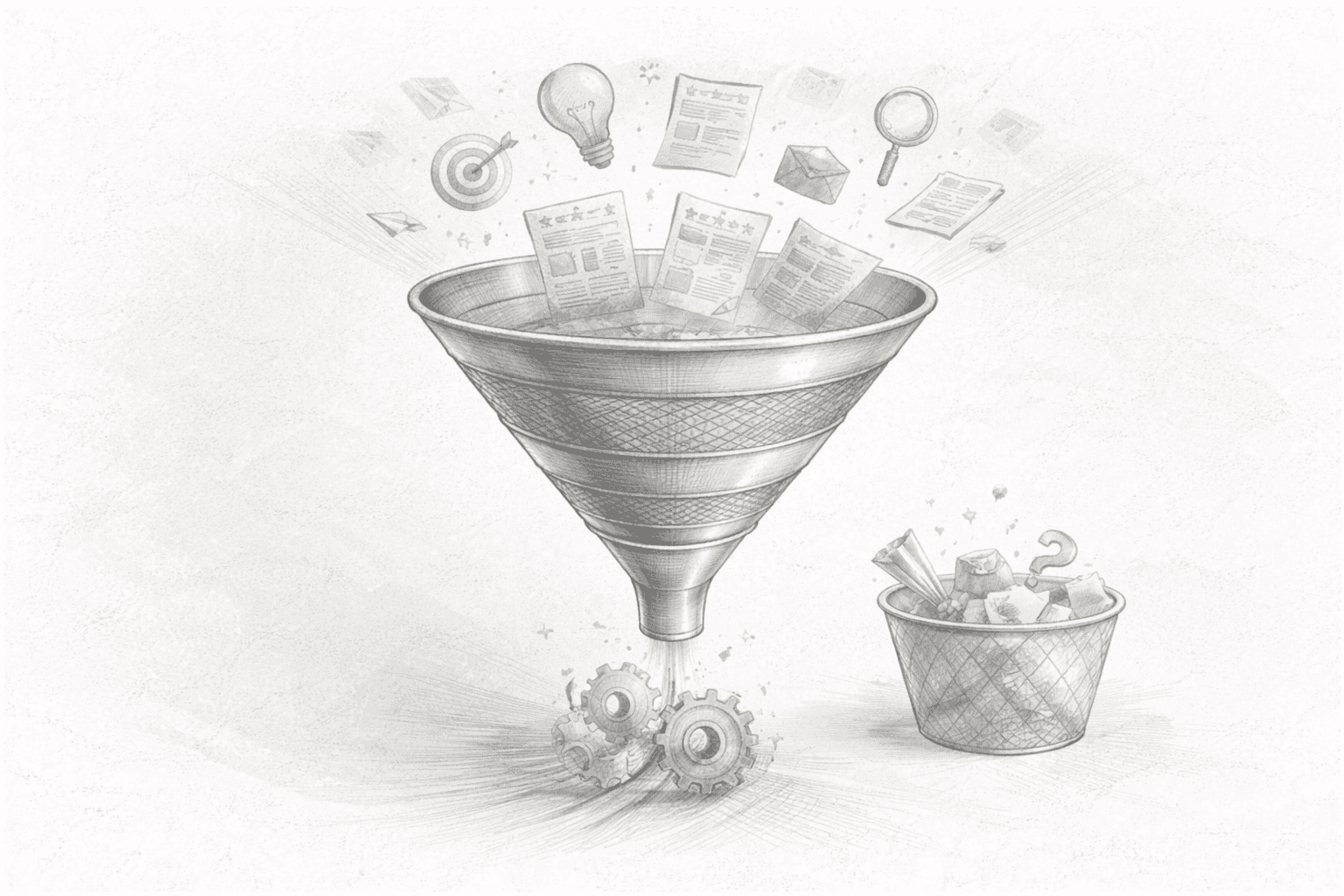
A strong brand doesn’t just communicate information. It filters decisions.
It shapes what the business says yes to, what it says no to, and how it shows up when conditions change. It provides a reference point when tradeoffs arise and pressure increases.
This filtering effect is what creates alignment. Without it, even talented teams find themselves circling the same questions again and again, unsure of what truly fits.
Why the Best Brands Don’t Feel Loud
This is why the most effective brands don’t feel loud or performative. They feel inevitable.
Their decisions feel intentional rather than reactive. Their presence feels coherent across touchpoints. Growth still comes with complexity, but it feels directional instead of chaotic—not because the business is moving slower, but because it’s moving with clarity.
That clarity is rarely accidental.
Brand as Infrastructure
When brand is treated as infrastructure rather than aesthetic, it compounds over time.
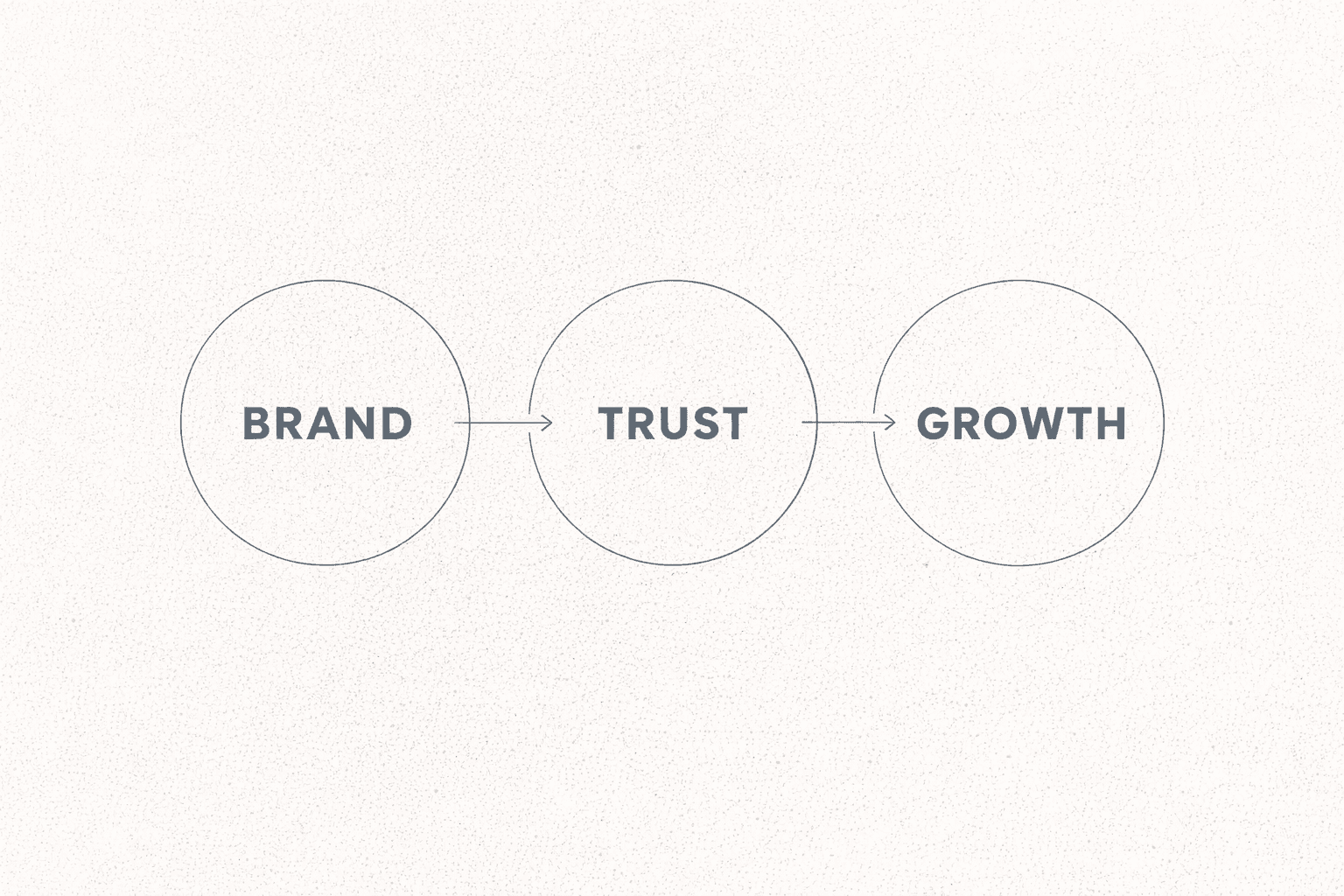
Trust builds more quickly because expectations are clear. Recognition deepens because the signals are consistent. Marketing becomes more efficient because the message no longer needs to explain itself from scratch.
Design, in this context, stops being subjective. It becomes anchored to purpose rather than taste, which removes friction from both creative and strategic decisions.
Perhaps most importantly, the organization gains internal confidence. Teams stop asking, “Does this feel right?” and start asking, “Does this align?”
That shift changes how decisions are made at every level.
The Real Risk Isn’t Ignoring Brand
The danger isn’t that businesses ignore brand altogether. Most don’t.
The danger is treating it as something cosmetic—something to revisit later, once the “real work” is done.
But brand is the real work. It’s the quiet architecture behind every touchpoint, every strategic decision, and every moment of trust. And like any form of architecture, when it’s weak, everything built on top of it eventually shows the strain.
What the Most Resilient Businesses Understand Early
The most resilient businesses recognize this early in their growth.
They don’t ask how their brand looks.
They ask how it works.
If you’re realizing that your brand is being treated more like decoration than infrastructure, that tension usually shows up elsewhere first.
Most teams don’t notice it until decisions feel harder than they should, alignment takes longer than it used to, or growth starts to feel heavier.
If you want help reframing brand as something that actually supports decision-making and long-term growth, feel free to reach out. I’m always open to thoughtful conversations.