The Hidden Cost of Design Debt
How small compromises quietly compound into friction, inconsistency, and lost momentum
The Kind of Problem You Don’t See Right Away
Design debt rarely announces itself.
There’s no single moment where it becomes obvious, no dramatic failure that forces attention. Instead, it shows up quietly—through small compromises, deferred decisions, and workarounds that feel reasonable in the moment.
Most teams don’t call it design debt. They call it progress. Speed. Practicality. Making do with what they have.
And early on, that framing makes sense.
When Speed Replaces Structure
Design debt often forms during periods of momentum. Things are moving quickly. Priorities are shifting. Decisions need to be made faster than systems can be built.
So shortcuts appear.
A layout is reused even though it doesn’t quite fit. A visual inconsistency is tolerated because it’s “temporary.” A decision is postponed because it feels less urgent than everything else competing for attention.
None of these choices are inherently wrong. In fact, many of them are made with good intentions.
The problem isn’t the decision itself.
It’s the decision to carry it forward without revisiting it.
The Compounding Effect
Design debt doesn’t grow through a single misstep. It compounds through repetition.
What starts as a small inconsistency becomes a pattern. What was once an exception slowly becomes the rule. Over time, the system bends to accommodate those early choices rather than correcting them.
This is why design debt feels heavier later than it did at the start. Each new decision has to account for the previous ones. Each addition requires more explanation, more alignment, more negotiation.
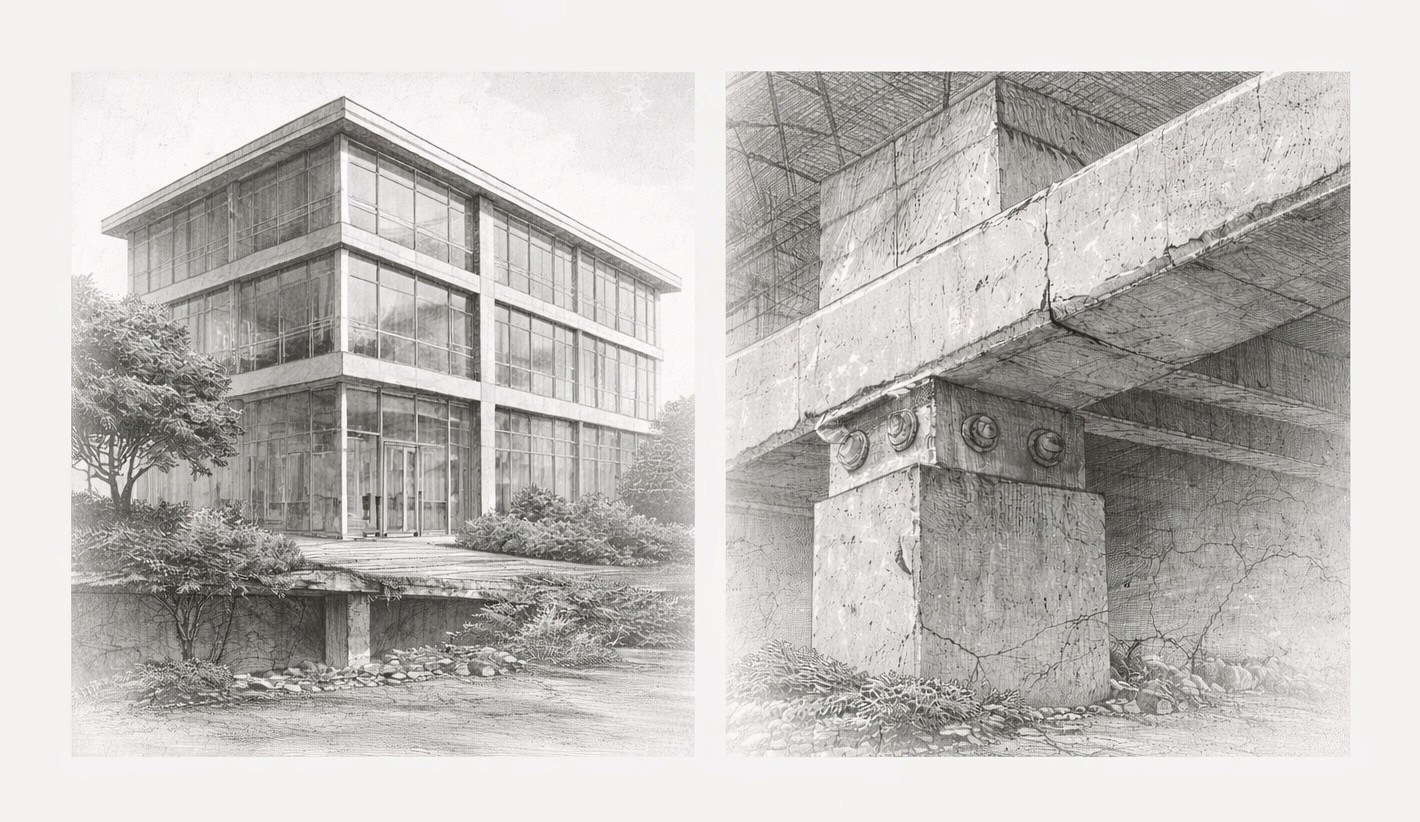
The structure still stands—but it’s working harder than it should.
Why “Good Enough” Feels Responsible
“Good enough” often feels like the mature choice.
It sounds practical. Disciplined. Focused on what really matters. In fast-moving environments, it’s easy to confuse restraint with responsibility.
But “good enough” has a habit of lowering the bar quietly.
When teams learn that friction is acceptable, they stop questioning it. When inconsistencies are tolerated, clarity erodes. Over time, the cost of revisiting earlier decisions begins to feel too high—even when those decisions are actively slowing things down.
What once saved time now consumes it.
Design Debt Isn’t Visual
One of the reasons design debt goes unnoticed is that it doesn’t always look bad.
The interface still functions. The brand still exists. The materials still get shipped. From the outside, everything appears intact.
But the real cost shows up elsewhere.
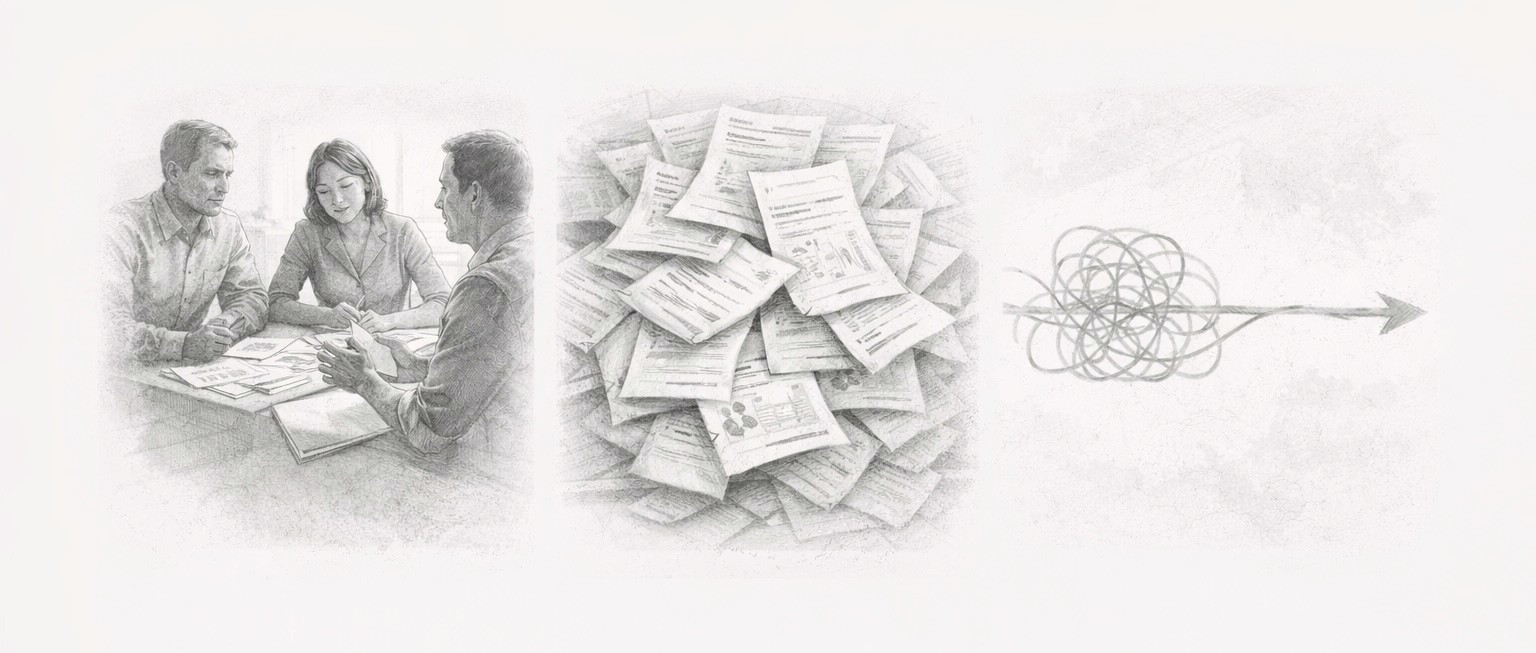
In longer meetings.
In repeated debates.
In decisions that take more energy than they should.
Design debt reveals itself in how hard it is to move forward, not in how things look at a glance.
What Addressing It Actually Requires
Addressing design debt doesn’t start with a redesign.
It starts with recognition.
With the willingness to ask which decisions are being carried forward out of habit rather than intent. Which compromises are still serving the business—and which are simply familiar.
This isn’t about perfection. It’s about recalibration.
Strong systems aren’t rigid. They’re revisited. Reinforced. Adjusted as weight increases. When that work is avoided, the cost doesn’t disappear—it accumulates.
The Cost Is Quiet, But It’s Real
Design debt doesn’t collapse businesses overnight.
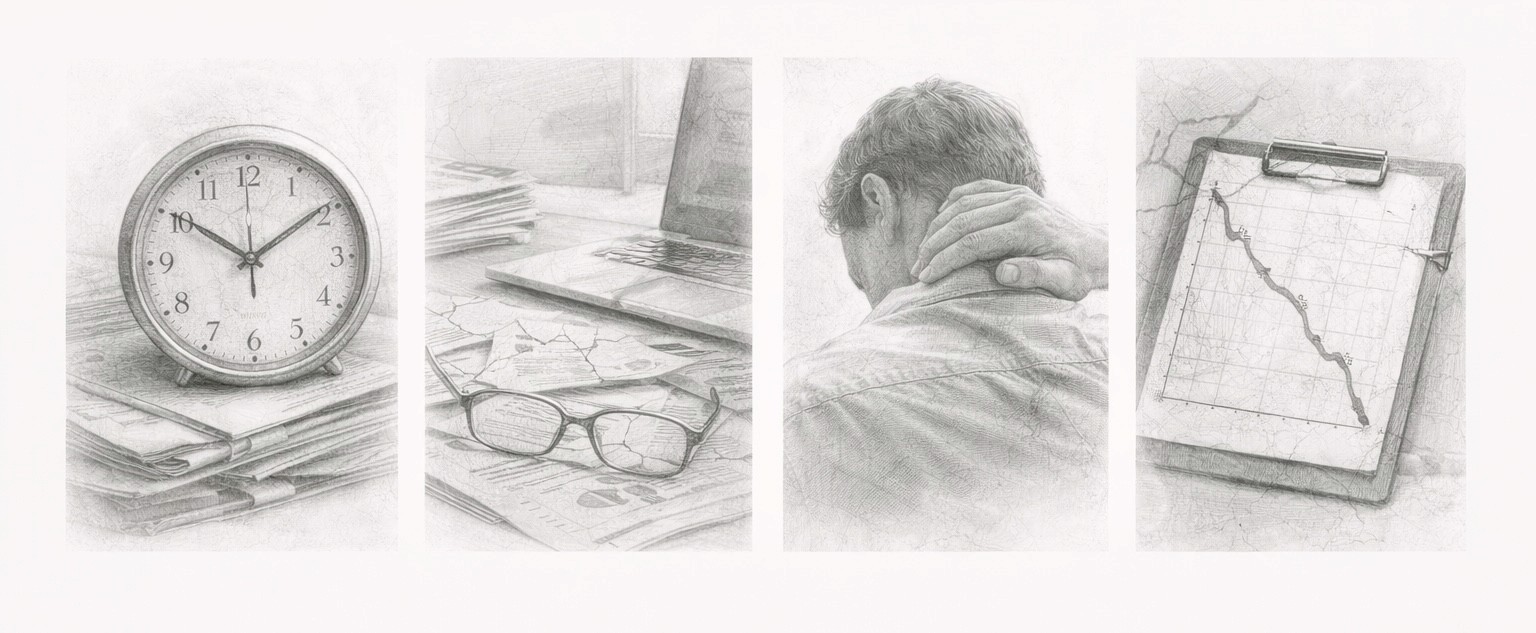
It slows them down gradually. It introduces friction where there should be flow. It turns clarity into negotiation and momentum into maintenance.
By the time it’s obvious, it’s usually been there for a while.
When Things Feel Heavier Than They Should
If any of this feels familiar, it’s usually because design debt doesn’t announce itself—it accumulates quietly.
Most teams don’t notice it until decisions take longer, alignment feels harder to reach, or progress starts requiring more effort than it used to.
If you want help identifying where that debt is forming, or untangling it before it compounds further, you’re welcome to reach out. I’m always open to thoughtful conversations.